The 2023 International Labour Organization (ILO) youth survey revealed that in Tunisia and Egypt, 80% of youth aged 15-29 worked informally while youth inactivity reaches 17% in Spain and 25% in Türkiye (Education at a Glance 2023 report). The same report claims that for multiple reasons young Mediterranean women are much more vulnerable and affected by dropping out of school and precarious employment. International reports indicate that inadequate learning and skills are key factors contributing to high NEET (youth Not in Employment, Education or Training) rates. Most education systems in the Middle East and North Africa (MENA) region do not focus on developing critical thinking and other skills necessary for the labour market and active civic life.

Al-Arish Castle Revitalization
Project Budget
EU Contribution
Countries
Partners
- To co-design and develop a transnational training program for Mediterranean youth CSOs, blending digital and face-to- face methods, focusing on engagement as a key skill for employment and addressing regional challenges through social and artistic innovation.
- To support and engage young Mediterranean people to advocate for positive changes in Mediterranean societies through the implementation of concrete local and transnational creative actions and promoting original projects.
- Trained 200 young people from Türkiye, France, Spain, Tunisia and Egypt, co-developing and applying innovative learning methods that fostered engagement and enhanced employment skills – digital, creative, and analytical – while addressing Mediterranean challenges.
- Strengthened young people’s civic actions.
- Fostered a transnational participatory dynamic.
- Co-design of a pedagogical framework for the MedYCI training program developed by young Mediterranean participants and experts across five regions.
- Creation of a multidisciplinary team of 30 trainers.
- 5 MedYCI training sessions implemented across 5 countries, directly engaging over 200 youngsters.
- Establishment of five MedYCI studios which will be fully operational to enhance creative young participants skills in each region.
- Strategic recommendations for the Mediterranean Youth Council ensuring they are informed by diverse youth perspectives across the Mediterranean.
- 5 showcases of 50 innovative ideas for a better future of the Mediterranean.
- 25 simultaneous local creative engaged actions executed by youth, across the Mediterranean.
- •10 transnational webtv show (Medtalk) created by MedYCI trained Mediterranean youth.
EVENTS
EVENTS
MEDIA
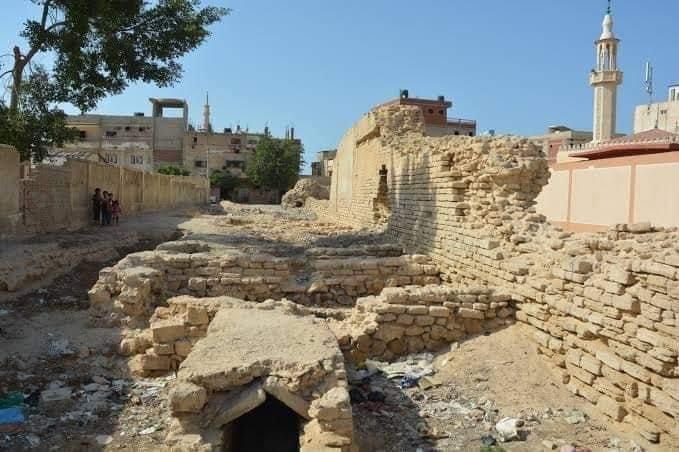
Al-Arish Castle Revitalization
MYF sought to architect an advocacy statement that urges the Egyptian government and relevant stakeholders to prioritize the revitalization of Al-Arish Castle, a crucial cultural heritage site in North Sinai, to foster youth engagement, community development, and sustainable tourism in the region This was through MYF’s proposal: “A Youth-Led Initiative for the Revitalization of AlArish Castle”, that primarily strives to urge the Egyptian Ministry of Tourism and Antiquities, the Ministry of Culture, and the local authority of Al-Arish to expand their efforts through Allocating a dedicated government national budget for Al-Arish Castle for cultural heritage preservation, ensuring a consistent annual financial provision to support restoration, maintenance, and operational needs and sustaining the site as a cultural and historical landmark.
Consequently, this culminated in greater youth engagement and participation in reviving their heritage. The local government of Al-Arish plans to develop programs where local youth, including those from schools and universities, can engage in hands-on conservation work, promoting eco-friendly practices in castle preservation, and holding educational workshops about the castle’s history and cultural significance. Furthermore, the enhancement of Al-Arish Castle assured that the Al-Arish Castle would morph into a cultural tourism hub through arranging events such as conferences, exhibitions, and concerts that emphasize the region’s heritage and draw both local and international visitors.
The statement, additionally, prompted the Egyptian Ministries of Tourism and Antiquities, as well as the Ministry of Culture, to allocate the required resources and technical knowledge to carry out urgent restoration and structural stabilisation of Al-Arish Castle. All restoration work were to adhere to international conservation standards, which ensured the site’s long-term preservation while boosting public accessibility
Furthermore, the statement urged the local administration of Al-Arish to support the allocation of a portion of tourism revenue from the castle and adjacent areas to ongoing historical conservation projects, assuring the castle’s conservation for future generations. Ultimately, The Ministry of Tourism and Antiquities ought to lead a comprehensive sustainable tourism initiative in Al-Arish, in collaboration with local authorities and stakeholders from the community.
This initiative had strived to promote eco-tourism, encourage community engagement, and provide chances for young people to develop their skills in heritage management and hospitality.
Project card
English (PDF)
project includes:
Project Status
Ongoing
Countries covered
5
Start date
01-01-2025
End date
31-01-2026
Programme
Erasmus+
Key Action
Learning Mobility of Individuals
Action Type
Mobility of youth workers