The 2023 International Labour Organization (ILO) youth survey revealed that in Tunisia and Egypt, 80% of youth aged 15-29 worked informally while youth inactivity reaches 17% in Spain and 25% in Türkiye (Education at a Glance 2023 report). The same report claims that for multiple reasons young Mediterranean women are much more vulnerable and affected by dropping out of school and precarious employment. International reports indicate that inadequate learning and skills are key factors contributing to high NEET (youth Not in Employment, Education or Training) rates. Most education systems in the Middle East and North Africa (MENA) region do not focus on developing critical thinking and other skills necessary for the labour market and active civic life.

Empowering Multicultural Mindsets: Developing Youth Multicultural Leadership in Egypt
Project Budget
EU Contribution
Countries
Partners
- To co-design and develop a transnational training program for Mediterranean youth CSOs, blending digital and face-to- face methods, focusing on engagement as a key skill for employment and addressing regional challenges through social and artistic innovation.
- To support and engage young Mediterranean people to advocate for positive changes in Mediterranean societies through the implementation of concrete local and transnational creative actions and promoting original projects.
- Trained 200 young people from Türkiye, France, Spain, Tunisia and Egypt, co-developing and applying innovative learning methods that fostered engagement and enhanced employment skills – digital, creative, and analytical – while addressing Mediterranean challenges.
- Strengthened young people’s civic actions.
- Fostered a transnational participatory dynamic.
- Co-design of a pedagogical framework for the MedYCI training program developed by young Mediterranean participants and experts across five regions.
- Creation of a multidisciplinary team of 30 trainers.
- 5 MedYCI training sessions implemented across 5 countries, directly engaging over 200 youngsters.
- Establishment of five MedYCI studios which will be fully operational to enhance creative young participants skills in each region.
- Strategic recommendations for the Mediterranean Youth Council ensuring they are informed by diverse youth perspectives across the Mediterranean.
- 5 showcases of 50 innovative ideas for a better future of the Mediterranean.
- 25 simultaneous local creative engaged actions executed by youth, across the Mediterranean.
- •10 transnational webtv show (Medtalk) created by MedYCI trained Mediterranean youth.
EVENTS
EVENTS
MEDIA

Establishing a Euro-Mediterranean University in Egypt: Towards an Educational Hub for Regional Integration
- The Mediterranean Youth Foundation (MYF) emphasizes the urgent need for developing multicultural youth leadership in Egypt, aligned with Sustainable Development Goal 4 and Egypt’s Vision 2030. Despite Egypt’s strategic location, many youths lack international exposure and face significant social inequalities. Nearly 60% of the population is under 30, making it essential to cultivate leaders equipped for global cooperation.
- International initiatives, like the Nasser Fellowship and UNESCO’s Youth 4 Sustainability, aim to enhance soft skills and facilitate cultural exchange, though follow-up actions remain limited. Research indicates a commitment among youths towards social transformation, but barriers such as unequal internet access among genders hinder inclusive leadership.
- Challenges extend beyond Egypt to other Mediterranean nations suffering from limited civic space and socioeconomic constraints affecting youth mobility. The MYF proposes a multi-level intervention strategy, urging local youth leadership events promoting inclusion, partnerships among NGOs and educational institutions, and fostering a broader International Volunteering Program for regional exchange. This approach seeks to create a sustainable framework for cultivating multicultural understanding and empowering youth across the Euro-Mediterranean region, ultimately building a foundation for sensitive leadership that can navigate diverse cultural landscapes.
- The document advocates for the launch of national intercultural mentorship programs in Egypt, organized by the Ministries of Education and Youth and Sports, aiming to unite young leaders of diverse nationalities to tackle local challenges. It highlights the need for integrating multicultural content into educational curricula, citing successful cases in Finland and studies showing positive impacts on teachers’ multicultural attitudes. Youssef Aroog, Co-President of the Mediterranean Youth Foundation, emphasizes the importance of empowering youth with multicultural mindsets to foster leadership and innovation. The message calls for collaboration among governments, civil society, and international partners to create inclusive environments for youth leadership development, positioning Egypt as a key player in the Euro-Mediterranean dialogue.
Why Egypt needs a Euro-Mediterranean University
- According to an article published by Al Tamimi & Co., the average number of students in a public classroom in Egypt is 45, while every year an additional 500,000-700,000 students enter schools, and only 31% of 18-22 year olds end up enrolled in universities. Egypt’s recent establishment of new public universities aims to address enrollment needs due to a growing population, yet these universities still become overcrowded quickly, straining resources and hindering the quality of education. Professor-to-student ratios become unfavorable, and access to facilities and support services thins. This overcrowd situation surpasses the challenges of a typical university.
- The Euro-Mediterranean University offers a unique solution. By partnering with European institutions, it can provide high-quality educational opportunities with international exposure, which would alleviate pressure on domestic universities while offering top students a chance to develop specialized skills and knowledge that benefit Egypt’s future. The university, then, becomes a strategic investment, fostering innovation and global competitiveness.
In agreement with the Sustainable Development Goal (SDG) 4, as well as the Egyptian strategies outlined in Vision 2030 which emphasize youth empowerment through access to inclusive education, skills development, and civic engagement opportunities, the Mediterranean Youth Foundation – MYF firmly invites and encourages the active engagement of government entities and NGOs in fostering multicultural and conscious youth leadership in Egypt. We also call on other Euro-Mediterranean countries to adopt similar practices in order to promote multicultural youth leadership.
Why Egypt needs to develop Youth Multicultural Leadership?
- Although Egypt holds a historically and geographically strategic position between the Mediterranean, the Middle East and Africa, many young Egyptians still face limited opportunities for direct international exposure, which restricts their access to cultural diversity, intercultural interactions and multicultural communication.
- Furthermore, the fact that approximately 60% of its population is under 30 years old and its ambition to participate in a global economy while facing social inequalities, lack of opportunities and political challenges enhances the urgency to develop youth multicultural leadership in Egypt. This would facilitate the emergence of more conscious young leaders in Egypt, better equipped to develop cooperation and an international dialogue.
What have been done so far?
- Several international initiatives about intercultural, inclusive and ethical youth leadership have taken place around the world. One example is the 5th edition of the Nasser Fellowship for International Leadership, held in May 2025 and facilitated by the Egyptian government and the UN. It counted on 150 youth from 80 countries in Nasser and it focused on multicultural cooperation and intercultural dialogue. Moreover, the Youth 4 Sustainability initiative was launched by UNESCO Egypt and it was designed to foster specific soft skills such as environmental awareness, digital literacy and entrepreneurship, all of them essential to cultivate conscious and inclusive leadership. In this context, the Egyptian Ministry of Youth and Sports also announced the establishment of the National Network for International Programs Alumni in 2021 as a governmental platform to connect Egyptian youth who represented the country abroad. However, after the initial launch and announcement, no further activities or initiatives under this unit were publicly communicated or implemented.
- Research shows that young Egyptians have developed a profound sense of responsibility and commitment towards meaningful social transformation, along with willingness to collaborate across cultures, particularly in their attitudes and choices for civic engagement.
- As reported by the Central Agency for Public Mobilization and Statistics (CAPMAS), 89% of Egyptian youth use the internet and 53% of youth use the internet to get access to health services in 2022. Those results highlight an increase in digital literacy and a higher possibility for them to engage with topics related to multicultural leadership. Nevertheless, challenges such as a lower percentage of internet access among women and girls highlight how important it is to create more inclusive policies and more specific interventions to foster youth leadership rooted in gender equity awareness.
- Studies such as Elassal and Marzouk (2023) reinforce the critical importance of youth leadership initiatives in Egypt being turned into political purposes. This not only threatens the genuine development of cross-cultural understanding, but also undermines the creation of safe and independent spaces where empathy and international cooperation can flourish.
A broaden challenge, a higher call to action
- The lack of youth and multicultural leadership is visible not only in Egypt, but also in other Mediterranean countries and is tied to limited international exposure. For instance, despite more than 70% of youth Tunisian desiring to emigrate, they face constraints on international mobility, which are highly influenced by socioeconomic disparities. Nevertheless, such mobility is fundamental for the development of global-minded leaders.
- In addition, there is a notable scarcity of inclusive and safe civic spaces, especially in Lebanon, where political tensions usually restrict open dialogue and youth participation. Across the countries mentioned, including Morocco, multicultural education remains underdeveloped though there is a potential possibility to integrate cross-cultural skills and ethical leadership into program curriculums.
- Furthermore, many NGOs rely on external resources due to funding constraints. Those bottlenecks underscore that this is not only a national issue, but a global concern, highlighting the urgent need to invest in youth leadership and multicultural initiatives. Such efforts are essential to foster intercultural competencies among young people and to create inclusive and equitable environments where they can develop to their fullest potential.
Mediterranean Youth Foundation’s Proposal:
- To ensure long-term impact in developing inclusive and multicultural youth leadership in Egypt and across the Euro-Mediterranean region, it is fundamental to act at multiple levels of intervention. Therefore, we present a set of proposals organized along a progressive scale of action, from a local level to a national level, which should be implemented in a complementary and integrated manner to maximize its effectiveness and long-term sustainability.
- Host a youth leadership event that highlights inclusion and cultural diversity. MYF proposes the organization and implementation of a local event, led by the Egyptian Ministry of Youth and Sports, along with the Egyptian Ministry of Social Solidarity to align completely with the Egyptian strategies outlined in Vision 2030. The event would bring together young people from diverse backgrounds, including youth from rural areas and marginalised genders to ensure truly inclusive participation. Unlike other international events such as the Nasser Fellowship where its focus is more geopolitical, this initiative is targeted on local realities and in the empowerment of underrepresented youth groups to enhance inclusive and diverse youth leadership. It is expected to feature workshops, debates and interactive activities on topics such as ethical leadership, active listening, empathy and cultural roles. To ensure sustainability and impact, the initiative would build on the collaboration between MYF and the Ministry of Youth and Sports in launching the international platform “Volunteer in Egypt” under the strategic project “International Volunteering Program in Egypt”. Furthermore, an open collaboration with Cairo University would emphasize gender sensitivity and cultural diversity in a continuous and institutionalized way.
- Develop youth-community partnerships to promote inclusive and multicultural youth leadership. Given the dependence of many NGOs on external funding, especially international, along with the lack of cooperation among youth leadership initiatives, building strategic partnerships and synergies between NGOs, businesses and educational institutions would reduce financial dependence and help develop long-lasting and inclusive leadership programs that promote multicultural understanding and inclusivity. In this regard, the development of the International Volunteering Program in Egypt into a broader International Volunteering Program for the Arab Region—envisioned as an “Arab Erasmus”, would provide an institutionalized platform for regional exchange, solidarity, and inclusive youth leadership. Additionally, the co-creation of youth-led pilot projects by the Egyptian Ministry of Culture and Egyptian Ministry of Social Solidarity, along with NGOs, schools and private organizations would enhance Egypt´s Vision 2030 for youth empowerment, as well as be a role model for other Mediterranean countries. In addition to the Mediterranean Youth Foundation for Development, other potential partners for the creation of such strategic collaborations include UNDP Egypt, and Heliopolis University for Sustainable Development. Such pilots and partnerships were already tested and implemented in Australia and an example of that is the National Youth Leadership Program – Muster Initiative, which strengthened community cohesion, fostered intercultural understanding and empowered young people to lead locally-driven inclusive initiatives with long-term social impact.
- Launch national intercultural mentorship programs. Organized by the Ministry of Education and the Ministry of Youth and Sports, the idea consists in the creation of an initiative that brings together young leaders from different nationalities to discuss local challenges and collaboratively develop innovative solutions alongside community, business and government leaders. A concrete example is the Canadian organization Global Vision, which implemented this strategy through its Regional Round Tables Initiative, promoting exposure to global issues, intercultural cooperation and hands-on youth diplomacy.
- Integrate multicultural content into existing educational curriculum. Considering that Egypt, like other Mediterranean countries, lacks the systematic integration of multicultural topics in formal education, incorporating multicultural content in the traditional curriculum would help in the development of transnational dialogue and cross-cultural understanding. Studies such as Akçaoğlu and Arsal (2022), conducted with 52 pre-service teachers from Turkey, show that after the integration of multicultural modules into the curriculum, there was an increase in multicultural attitudes and they felt more capable of managing cultural diversity in the classroom, adapting pedagogical practices and fostering an inclusive learning environment. This approach also has been already implemented in countries such as Finland with the KukaS Project in Finnish Schools, which enhanced educators´cultural and religious awareness by integrating diversity into the daily teaching practices instead of addressing it as isolated content, intercultural dialogue and supported meaningful inclusion. Thus, the successful implementation of this strategy in Egypt is fundamental for the development of youth multicultural leaders, as proposed in previous studies (Moussa et al., 2023) and it should rely on the responsibility and commitment of the Ministry of Education and the Ministry of Higher Education.
- “At Mediterranean Youth Foundation, we deem that empowering youth with multicultural mindsets is not a mere luxury but an absolute necessity for Egypt and the Euro-Mediterranean region’s destiny. Our vision is to build a generation of leaders who perceive diversity as an opportunity for strength and innovation. This mission cannot be accomplished in isolation; hence, I urge the governments, civil society, and international partners to join us on this urgent transformative journey”.
— Youssef Aroog, Co-President, Mediterranean Youth Foundation for Development
- Youssef’s own story reflects this vision. Growing up in Al-Arish, a border city rich in history yet often isolated from direct international exposure, he was driven by a deep curiosity to discover new cultures and understand what life was like across the Mediterranean. That early spark of curiosity became the foundation of his commitment to multicultural dialogue. Today, as Co-President of the Mediterranean Youth Foundation, he is dedicated to ensuring that young people across Egypt have the opportunities he once longed for — to engage in intercultural exchange, develop inclusive leadership skills, and shape Egypt’s role in a more interconnected world.
- Developing inclusive and multicultural youth leadership in Egypt is not just about policy frameworks or institutional strategies, it is about investing in people, stories, and lived experiences like Youssef’s. When young Egyptians are empowered to see diversity as a source of strength, they are better prepared to bridge divides, create innovative solutions, and position Egypt as a vital contributor to intercultural dialogue in the region. We call on governments, civil society, academia, and international partners to act with urgency and unity: to create safe, independent, and inclusive spaces where youth leadership can flourish. The time to shape a generation of globally minded, empathetic, and resilient leaders is now, for Egypt, for the Mediterranean, and for the world.
How can you help?
- Spread the word! Share this statement and let your network know about our initiative.
- Stay tuned! We’ll keep you updated on our progress
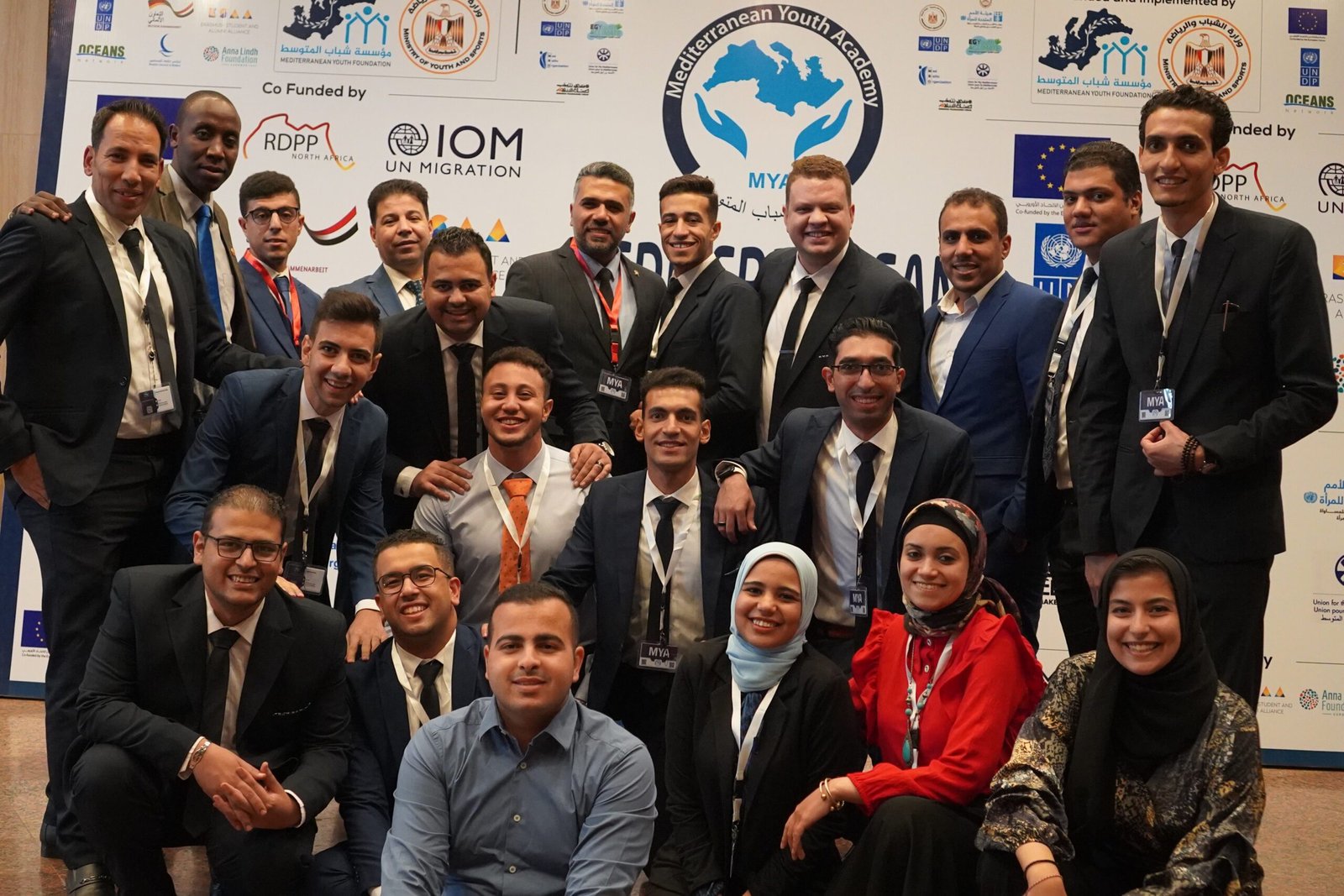
project includes:
Project Status
Completed
Countries covered
4
Start date
31-05-2025
End date
30-05-2027
Programme
Erasmus+
Key Action
Learning Mobility of Individuals
Action Type
Mobility of young people