The 2023 International Labour Organization (ILO) youth survey revealed that in Tunisia and Egypt, 80% of youth aged 15-29 worked informally while youth inactivity reaches 17% in Spain and 25% in Türkiye (Education at a Glance 2023 report). The same report claims that for multiple reasons young Mediterranean women are much more vulnerable and affected by dropping out of school and precarious employment. International reports indicate that inadequate learning and skills are key factors contributing to high NEET (youth Not in Employment, Education or Training) rates. Most education systems in the Middle East and North Africa (MENA) region do not focus on developing critical thinking and other skills necessary for the labour market and active civic life.

Establishing a Euro-Mediterranean University in Egypt: Towards an Educational Hub for Regional Integration
M€
0
Project Budget
0
%
EU Contribution
0
Countries
0
Partners
Why the project matters
What it aims to achieve
- To co-design and develop a transnational training program for Mediterranean youth CSOs, blending digital and face-to- face methods, focusing on engagement as a key skill for employment and addressing regional challenges through social and artistic innovation.
- To support and engage young Mediterranean people to advocate for positive changes in Mediterranean societies through the implementation of concrete local and transnational creative actions and promoting original projects.
Expected change
- Trained 200 young people from Türkiye, France, Spain, Tunisia and Egypt, co-developing and applying innovative learning methods that fostered engagement and enhanced employment skills – digital, creative, and analytical – while addressing Mediterranean challenges.
- Strengthened young people’s civic actions.
- Fostered a transnational participatory dynamic.
What the project delivers
- Co-design of a pedagogical framework for the MedYCI training program developed by young Mediterranean participants and experts across five regions.
- Creation of a multidisciplinary team of 30 trainers.
- 5 MedYCI training sessions implemented across 5 countries, directly engaging over 200 youngsters.
- Establishment of five MedYCI studios which will be fully operational to enhance creative young participants skills in each region.
- Strategic recommendations for the Mediterranean Youth Council ensuring they are informed by diverse youth perspectives across the Mediterranean.
- 5 showcases of 50 innovative ideas for a better future of the Mediterranean.
- 25 simultaneous local creative engaged actions executed by youth, across the Mediterranean.
- •10 transnational webtv show (Medtalk) created by MedYCI trained Mediterranean youth.
EVENTS
EVENTS
MEDIA
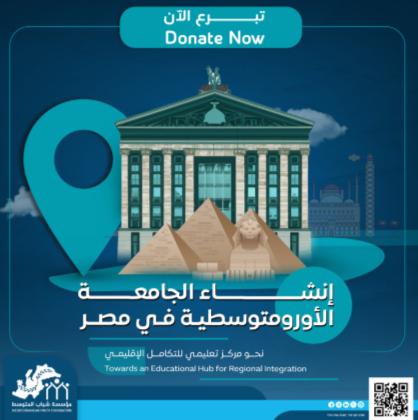
Establishing a Euro-Mediterranean University in Egypt: Towards an Educational Hub for Regional Integration
- In accordance with the Mediterranean Youth Academy’s recommendations, the Mediterranean Youth Foundation for Development advocates for the establishment of a Euro-Mediterranean University in Egypt. This institution is envisioned as a center for education, regional integration, and expertise in political, social, and sports science, aiming to foster high-quality education and cultural exchange among Euro-Mediterranean countries. The proposal responds to pressing educational challenges in Egypt, where overcrowding in public universities hampers quality and access, despite the establishment of new institutions to accommodate a growing student body.
- The Euro-Mediterranean University can alleviate pressures on existing universities by collaborating with European institutions to provide improved educational opportunities, equipping students with specialized skills vital for Egypt’s future. Examples such as the EMUNI in Slovenia demonstrate the potential for these institutions to facilitate cultural integration and academic exchange, promoting collaboration among institutions across the region.
- Moreover, the need for further economic integration in the Euro-Mediterranean area has been highlighted, particularly post-COVID-19. Such universities can play a pivotal role in addressing regional challenges while fostering mutual understanding among future generations. Egypt’s strategic position and large youth population make it an ideal candidate for this initiative.
- To actualize this vision, coordinated efforts from various stakeholders—including the Egyptian government, European partners, and the Union for the Mediterranean (UfM)—are essential. This includes land allocation for the university, licensing and planning assistance from the Egyptian Ministry of Higher Education, endorsement from the UfM, and financial backing from UNESCO and EU partners. The campaign also encourages public donations to support the establishment of this transformative educational institution, emphasizing its potential to positively impact regional development and cooperation. The Mediterranean Youth Foundation believes that the Euro-Mediterranean University will be a transformative force in the region, fostering innovation and collaboration among young people.
- In line with the third edition of the Mediterranean Youth Academy – MYA’s recommendations, the Mediterranean Youth Foundation for Development – MYF strongly invites and encourages for the establishment of a Euro-Mediterranean University in Egypt envisioned as a hub for education and regional integration, and a center of expertise in political, social, and sports science.
- The proposal to build a Euro-Med University in Egypt stems from the desire to create a space that not only provides high-quality education but also serves as a meeting point for cultural integration among Euro-Mediterranean countries. The aim is to establish an academic institution of excellence that fosters academic and cultural exchange, promoting mutual understanding and collaboration among the diverse cultures of the Euro-Mediterranean region. Such a university would not only serve as a center for regional integration, and a beacon for political, strategic, and scientific studies as well as cultural and cultural heritage studies in the Euro-Mediterranean region, but would also have a significant impact on the social and economic development of the region, helping to form a new generation of leaders with an international perspective.
Why Egypt needs a Euro-Mediterranean University
- According to an article published by Al Tamimi & Co., the average number of students in a public classroom in Egypt is 45, while every year an additional 500,000-700,000 students enter schools, and only 31% of 18-22 year olds end up enrolled in universities. Egypt’s recent establishment of new public universities aims to address enrollment needs due to a growing population, yet these universities still become overcrowded quickly, straining resources and hindering the quality of education. Professor-to-student ratios become unfavorable, and access to facilities and support services thins. This overcrowd situation surpasses the challenges of a typical university.
- The Euro-Mediterranean University offers a unique solution. By partnering with European institutions, it can provide high-quality educational opportunities with international exposure, which would alleviate pressure on domestic universities while offering top students a chance to develop specialized skills and knowledge that benefit Egypt’s future. The university, then, becomes a strategic investment, fostering innovation and global competitiveness.
- A representative example of this idea is the Euro-Mediterranean University – EMUNI in Slovenia. Founded with the goal of promoting higher education and research among the Mediterranean and European Union countries, EMUNI is a model of inclusion and education that has successfully facilitated cultural integration and academic exchange. By offering academic programs that attract students from across the Euro-Mediterranean region, EMUNI creates a diverse and inclusive academic community. The institution promotes collaborations among universities, research bodies, and cultural institutions from various countries, fostering the exchange of knowledge and experiences. Furthermore, the university regularly organizes conferences, workshops, and seminars that bring together experts and students from different countries, promoting intercultural dialogue and mutual understanding.
- The Euro-Mediterranean University of Fes – UEMF serves as another powerful example of the transformative potential of such institutions, demonstrating how a Euro-Med university can effectively operate to promote cultural integration and high-quality education, serving as a reference point for the creation of a similar institution in Egypt.
- By replicating this model in Egypt, we can create a new hub for intellectual exchange and cultural integration, building upon existing knowledge and empowering young people to become agents of positive change across the region.
- Why the Region Needs a Euro-Mediterranean University in Egypt
- The Euro-Mediterranean region, despite existing partnerships, still has a gap in economic integration and shared development. The report “Regional Integration in the Union for the Mediterranean: Progress Report” highlights several key areas where the Euro-Mediterranean region can benefit from further integration, particularly in the wake of the COVID-19 pandemic, emphasizes the uneven progress in regional integration, especially in areas like higher education and research, and calls for the facilitation of student mobility.
- More Euro-Mediterranean Universities can bridge this divide. These institutions foster collaboration between scholars from both sides of the Mediterranean. By jointly tackling regional challenges like water scarcity, climate change, and migration, they create evidence-based solutions and policy recommendations with a broader perspective. Furthermore, these universities act as a magnet for students from across the region, fostering understanding and cultural exchange between future generations, leading to a more cohesive Euro-Mediterranean community.
- Egypt is a prime location for a new Euro-Mediterranean University as it boasts a rich academic history and a central geographic position within the region that allows for easier collaboration
- and knowledge exchange between North African and European institutions. Additionally, Egypt’s large and growing youth population presents a vast pool of potential students eager to contribute to the region’s development. A Euro-Mediterranean University in Egypt would empower these young minds and equip them with the skills and understanding to address the region’s most pressing issues.
A Call to Action
- The vision of a Euro-Mediterranean University as a hub of education and collaboration for young people across the region, is one we can’t afford to miss. To turn this vision into reality, we urge a collective effort from the Egyptian government, European partners, and the Union for the Mediterranean – UfM. We call upon:
- The Presidency of the Council of Ministers in Egypt to allocate two plots of land with a suitable area in the New Alamein City and the New Administrative Capital to the Mediterranean Youth Foundation for Development, within the framework of obtaining the status of public benefit and the privileges of the public authority under Articles 55/56 of the Law on Regulating the Exercise of Civil Work for the year 2019.
- The Egyptian Ministry of Higher Education to license the university and provide technical expertise in developing a comprehensive plan for the university’s structure, curriculum, and governance.
- The UfM to endorse this initiative by awarding it the UfM label and recognizing its potential to contribute to the UfM’s mission of promoting regional cooperation and development.
- UNESCO to support and finance the establishment of the university.
- EU partners to provide financial support in establishing the university.
- The relevant stakeholders to invest in constructing an eco-friendly state-of-the-art campus that fosters collaboration and innovation.
- Public Donations, MYF has successfully received, from the Egyptian Authorities, a government license to collect donations for the establishment of the Euro-Mediterranean University in Egypt. You can donate through the following:
Bank account:
- EGP Account Number: 8160211802096277003
- IBAN: EG770022551660211802096277003
- USD Account Number: 8160211802096277001
- IBAN: EG340022551660211802096277001
EUR Account
- EUR Account Number: 8160211802096277002
- IBAN: EG070022551660211802096277002
- Bank Name: Al Baraka Bank of Egypt
- SWIFT Code: ABRKEGCA
- Branch Code: FSL
- Bank Address: 2 Al Salam St, Faisal, Giza, 12515
MYF believes that a Euro-Mediterranean University in Egypt has the potential to be a transformative force for good in the region. By investing in education and fostering cooperation, we can build a brighter future for all young people across the Mediterranean.
We urge all stakeholders to join us in advocating for the establishment of this vital institution. Together, we can make the vision a reality.
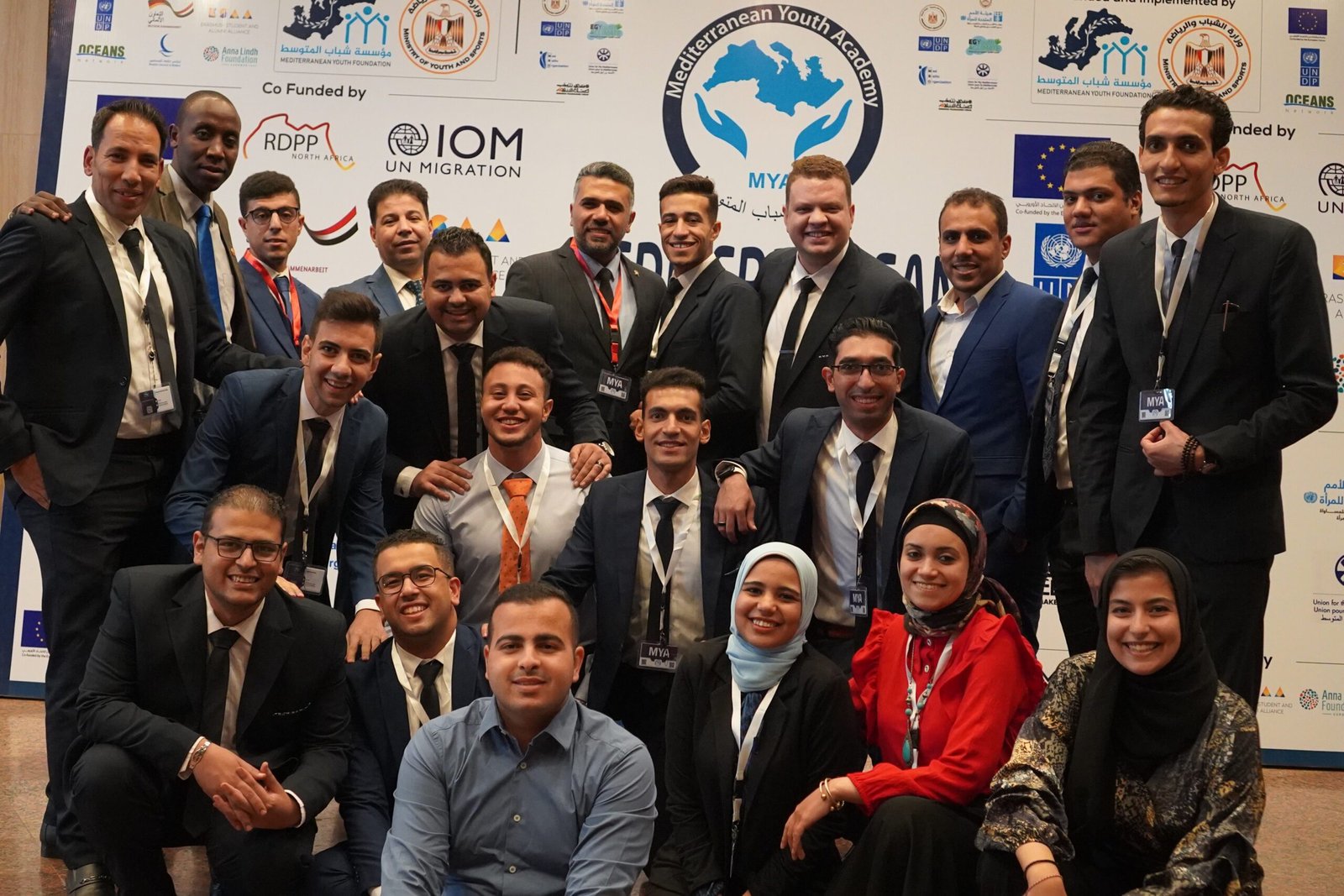
project includes:
Project Status
Completed
Countries covered
4
Start date
31-05-2025
End date
30-05-2027
Programme
Erasmus+
Key Action
Learning Mobility of Individuals
Action Type
Mobility of young people