The 2023 International Labour Organization (ILO) youth survey revealed that in Tunisia and Egypt, 80% of youth aged 15-29 worked informally while youth inactivity reaches 17% in Spain and 25% in Türkiye (Education at a Glance 2023 report). The same report claims that for multiple reasons young Mediterranean women are much more vulnerable and affected by dropping out of school and precarious employment. International reports indicate that inadequate learning and skills are key factors contributing to high NEET (youth Not in Employment, Education or Training) rates. Most education systems in the Middle East and North Africa (MENA) region do not focus on developing critical thinking and other skills necessary for the labour market and active civic life.

Fighting islamophobia and preventing the rise of far-right extremism
Project Budget
EU Contribution
Countries
Partners
- To co-design and develop a transnational training program for Mediterranean youth CSOs, blending digital and face-to- face methods, focusing on engagement as a key skill for employment and addressing regional challenges through social and artistic innovation.
- To support and engage young Mediterranean people to advocate for positive changes in Mediterranean societies through the implementation of concrete local and transnational creative actions and promoting original projects.
- Trained 200 young people from Türkiye, France, Spain, Tunisia and Egypt, co-developing and applying innovative learning methods that fostered engagement and enhanced employment skills – digital, creative, and analytical – while addressing Mediterranean challenges.
- Strengthened young people’s civic actions.
- Fostered a transnational participatory dynamic.
- Co-design of a pedagogical framework for the MedYCI training program developed by young Mediterranean participants and experts across five regions.
- Creation of a multidisciplinary team of 30 trainers.
- 5 MedYCI training sessions implemented across 5 countries, directly engaging over 200 youngsters.
- Establishment of five MedYCI studios which will be fully operational to enhance creative young participants skills in each region.
- Strategic recommendations for the Mediterranean Youth Council ensuring they are informed by diverse youth perspectives across the Mediterranean.
- 5 showcases of 50 innovative ideas for a better future of the Mediterranean.
- 25 simultaneous local creative engaged actions executed by youth, across the Mediterranean.
- •10 transnational webtv show (Medtalk) created by MedYCI trained Mediterranean youth.
EVENTS
EVENTS
MEDIA

Topics
Objectives
The project specifically aimed at enhancing the overall understanding of the driving factors of anti-Islamic sentiment in the partaking countries, which included its manifestations offline and online, the push and pull factors of perpetrators, their profile, the places it take place, how it is being addressed legally by the state and how social media platforms are used to disseminate and reinforce those negative perceptions. By doing so the project aimed at improving the critical thinking of youth workers and their intervention skills when it comes to addressing Islamophobia in their respective countries. The trainings further aimed at teaching practitioners how to address the psychological, emotional and physical needs of victims of anti-Muslim hate speech/crime, after hearing their stories and providing them with a platform to raise their voices. By exploring different case studies in an interactive manner, the project intended to also debunk myths regarding refugees and asylum seekers, and show the double standards of certain countries in their attitudes towards those groups.
The specific objectives of the project were the following:
- to encourage youth workers to research trends of far-right extremism and evaluate existing practices.
- to enhance their media literacy skills and competences for the purposes of recognizing suspicious contents and behaviour online.
- to train youth workers how to work with victims of anti-Muslim hate speech/crime.
- to ameliorate youth workers competences on national legal frameworks related to tackling Islamophobia.
- To train youth workers how to approach youth at risk of far-right radicalization with empathy and compassion, in order to develop relationships that will help the latter avoid radicalization.
- To exchange best practices and experiences between organisations to encourage mutual learning and intercultural awareness.
- to expand the networks of individual organizations for the purposes of planning future initiatives based on their respective target groups and fields of activity.
Implementation
Before attending participants were asked in their country teams to prepare information on the legal framework and the working definitions of terrorism, extremism, hate speech, hate crime and Islamophobia in each country. They were asked to look at who the perpetrators of anti-Muslim hate speech or crime are and what are their motivations. The political environment and social context of their countries was further part of the required description. Participants had to select at least two case studies to present to the others.
Subsequently the training in DK included various activities for the purposes of achieving the objectives of the project.
We started with discussion of the working terminology of terms as terrorism, hate speech, Islamophobia and so on. Cross comparison with the working definitions in each partner
Partners
AL-EMAD ALKABEER FOR TRAINING AND DEVELOPMENT CO. 🇯🇴 Jordan
ZINC king hussein business park
11180 AMMAN
Jordan
🇯🇴 Jordan
Partner Type: Non-governmental organisation/association/social enterprise
Phone: +962797799196
Budapesti Egyesület a Nemzetközi Sportért 🇭🇺 Hungary
Ferenc tér 2-3. VII/2
1094 BUDAPEST
Budapest
🇭🇺 Hungary
Partner Type: Non-governmental organisation/association/social enterprise
Phone: +36208080550
EVROPSKE CENTRUM MLADEZE BRECLAV EUROPEAN YOUTH CENTRE BRECLAV Z. S. 🇨🇿 Czechia
SADY 28. RIJNA 1
690 02 BRECLAV
Jihomoravský kraj
🇨🇿 Czechia
Partner Type: Non-governmental organisation/association/social enterprise
Phone: +420776258745
INTERNATIONALE ARBEIDSVERENIGING 🇳🇱 Netherlands
Keizersgracht 482
1017EG Amsterdam
Noord-Holland
🇳🇱 Netherlands
Partner Type: Non-governmental organisation/association/social enterprise
Phone: +31246690531
Mediterranean Forum For Social Development 🇲🇦 Morocco
Rue El Baakili Im 12 Appt N° 4 , Agdal,Rabat
10200 Rabat
Morocco
🇲🇦 Morocco
Partner Type: Non-governmental organisation/association/social enterprise
Phone: +212667877729
Project card
English (PDF)
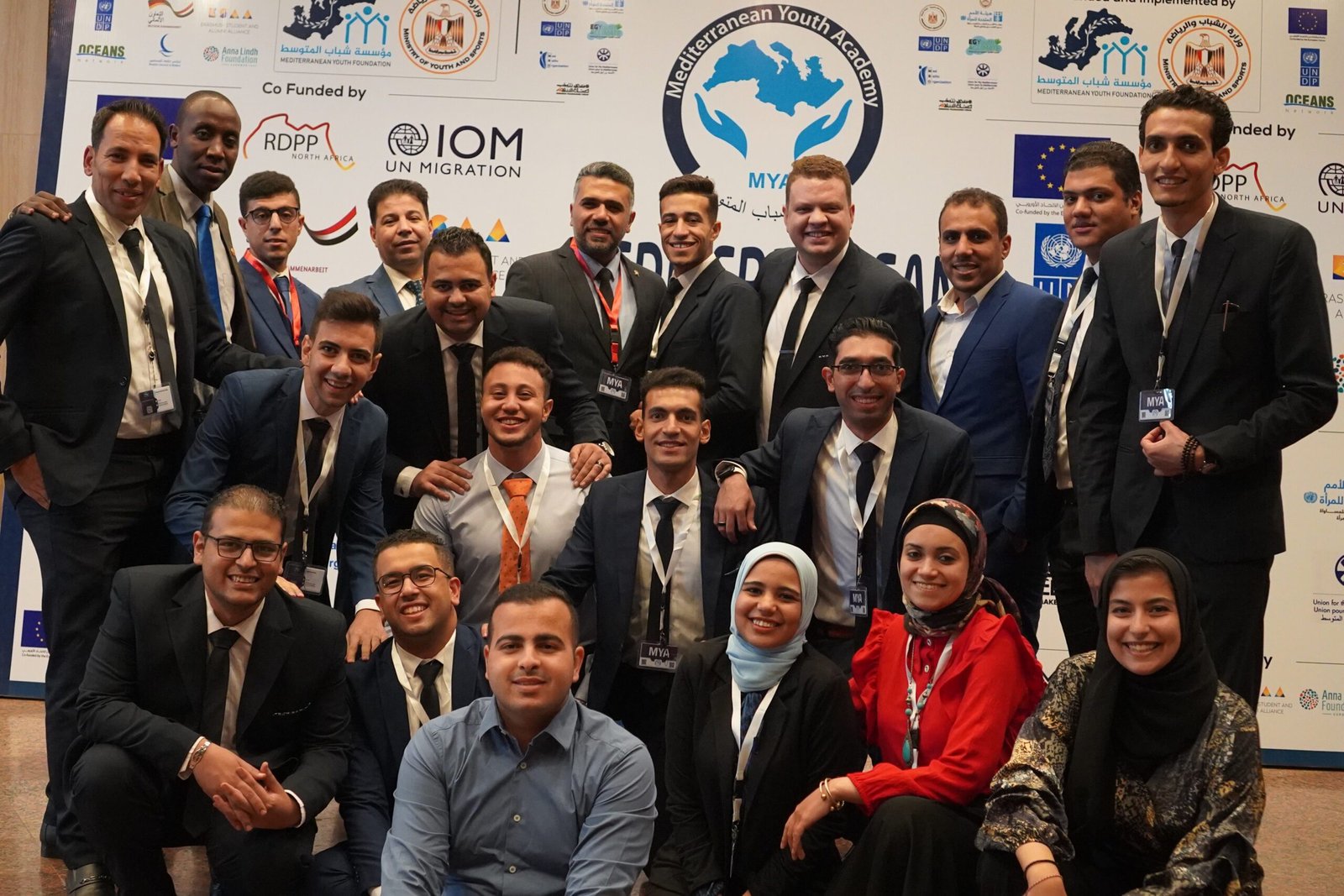
project includes:
Project Status
Completed
Countries covered
11
Start date
01-01-2023
End date
31-01-2024
Programme
Erasmus+
Key Action
Learning Mobility of Individuals
Action Type
Mobility of youth workers